
A global community of practice
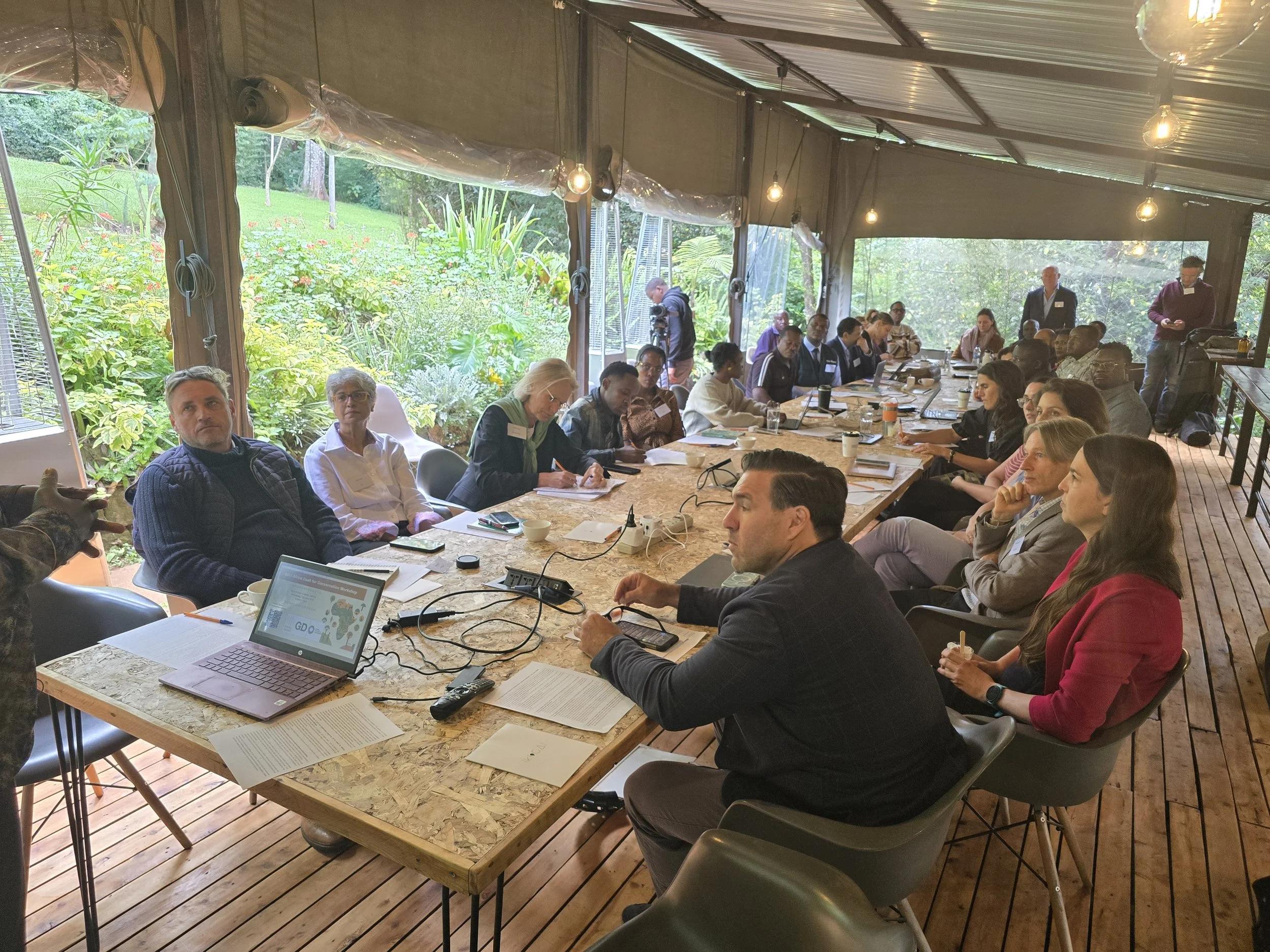
Cash for Conservation was founded at COP29 in Baku by several organisations who were already working at the intersection of cash transfers and climate impact.
It is an open network, free to join, and anyone who shares our principles below is welcome to join. We are coordinated by a secretariat consisting of NGOs Equal Right, Cool Earth, GiveDirectly and 100WEEKS, and organise across regular meetings and four workstreams.
These principles ground and unite the work of the group
- 1
Justice-based approaches
We are grounded in justice-based approaches to tackle the biodiversity and climate crises.
- 2
The potential of unconditional cash
We believe in the potential of unconditional cash to drive nature conservation by addressing underlying financial barriers. We do not advocate for one particular basic income model, but are open to a range of models consistent with these principles.
- 3
Diverse understandings
We acknowledge diverse understandings of terms like conservation and sustainable development, but are united by the principle of empowering people to live in harmony with nature.
- 4
Evidence building
We are committed to building a robust evidence base on unconditional cash models to address the limitations of market-based instruments.
Cash for Conservation has over 75 members across five continents
Our members are INGOs, CSOs, Indigenous organisations, researchers, experts and advocates. Some of the organisations who are members of Cash for Conservation are listed below.
Secretariat
Coordinating the network


Members
47 listed, alphabetically

































Our theory of change
The people who live with nature protect it best. Resource them directly, at scale.
Unconditional cash becomes a core, trusted tool for conservation and nature outcomes: advancing human dignity, livelihoods and biodiversity within a fairer conservation finance ecosystem.
Project funding to run the pilot portfolio, plus core funding to sustain and grow the network.
Four workstreams, open to every member
Practice & Implementation
- Share best practice in delivering cash for conservation projects
- Collaborate on project design and delivery
- Develop and implement new projects
isabelle.pelly@givedirectly.org
Research & Dissemination
- Collect evidence on the theory and practice of conservation basic income
- Develop policy documents framing cash as an alternative to market-based instruments
- Conduct formal monitoring and evaluation of projects
robert.fletcher@wur.nl
Campaigns & Advocacy
- Collaborate on media and communications opportunities
- Pursue joint meetings with policymakers to influence the policy agenda
- Organise events to raise awareness and influence opinion
patrick@equalright.org
Funding
- Share ideas and collaborate on fundraising to support the group's work
- Influence donors to market-based instruments to consider direct redistribution
- Collaborate on innovative funding models such as Cap & Share and forest carbon dividends
martine.wijnstra@100weeks.org
Frequently asked
Is Cash for Conservation an organisation?
No. It is an open network of organisations, researchers and advocates, coordinated by a secretariat of four NGOs: Equal Right, Cool Earth, GiveDirectly and 100WEEKS. There is no membership fee and no legal entity. Members contribute through four workstreams.
What counts as a Cash for Conservation project?
A programme or project led by one of our members. Those projects vary considerably in design, eligibility and the degree of conditionality involved. There is no strict definition, and the group deliberately has not imposed one.
Does unconditional cash actually deliver conservation outcomes?
That is the question the group exists to answer. Rigorous evidence specific to unconditional cash and ecological outcomes is still limited, and the few causal studies that exist do not all point the same way. There is a much larger evidence base on cash transfers generally, and on payments for ecosystem services, which the resource library draws on for context.
How is this different from payments for ecosystem services or REDD+?
Market-based instruments pay for a measured environmental outcome and tie the payment to compliance. Unconditional transfers do not. The argument is that removing conditionality removes administrative cost, reduces exclusion, and treats recipients as people rather than contractors. The counter-argument is that removing conditionality removes the mechanism linking money to the environmental result. Both are set out in the literature in our resources library.
Who funds this work?
Individual projects are funded by their lead organisations and their donors. The network itself is coordinated by the secretariat. The Funding workstream works on collective fundraising and on innovative financing models.
How do I join?
Through the form on the Get Involved page. Membership is free and open to anyone who shares the principles above. Members are expected to contribute to at least one workstream.